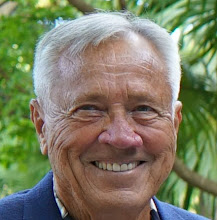
Senate Banking Committee Chairman Christopher Dodd on Friday said banks may have to be nationalized for a short time. Dodd’s careless remarks about bank nationalization followed a similar remark made a few days earlier by Senator Lindsey Graham, who said nationalization is an option for dealing with troubled U.S. banks if they fail the U.S. Treasury's stress test. Dodd’s remark sent stock prices, especially bank shares, into a midday free fall, caused sharp price rises in U.S. Treasury securities and gold, and led to a significant fall in the dollar on foreign exchange markets.
Loose lipped comments by Senators can have disastrous consequences. For example, Senator Charles Schumer’s remark a few months ago regarding IndyMac is widely regarded as having contributed to a run on that thrift and its closing. Similarly, Senator Harry Reid’s comment that a major insurance company was about to fail contributed to the collapse of insurance company stocks.
Amazingly, Senator Dodd appeared surprised that his remarks had such a devastating impact on the markets. His amazement testifies to the fact that he, as well as Senators Graham, Schumer, and Reid, have lost touch with the dire situation facing this nation. In particular, they have shown a failure to fully appreciate the increasing nervousness and concern of consumers and investors.
The nation is on the precipice of a true economic collapse. People are walking a fine line between hope and despair.
Given the fragile state of consumer psychology, Senators and other leaders need to be aware that lame brained remarks could easily push us off the cliff. They need to avoid fanning the flames.
Sunday, February 22, 2009


Wednesday, February 18, 2009
Bank Nationalization Opponents Need To Thank Greenspan
Alan Greenspan, the former Chairman of the Federal Reserve, who many view as the primary culprit for today’s economic problems, has come out of hiding to express his views on the subject of bank nationalization. Greenspan told The Financial Times “It may be necessary to temporarily nationalize some banks in order to facilitate a swift and orderly restructuring.”
Opponents of bank nationalization should thank Greenspan. After all, who in their right mind would rely on the views of a person weighed down with an admittedly broken economic model. He greased the skids for this slide into the abyss; he does not hold the solution.
Opponents of bank nationalization should thank Greenspan. After all, who in their right mind would rely on the views of a person weighed down with an admittedly broken economic model. He greased the skids for this slide into the abyss; he does not hold the solution.
Tuesday, February 10, 2009
Hope Evaporates - Stock Market Plummets
President Obama’s election campaign focused on change he would bring that would turnaround the economy. The team of economic advisers he introduced only days after his election testified to the priority he intended to give to the economy. Paul Volcker, the former Federal Reserve Board Chairman, lent great credibility as the head of that advisory group and expectations for an economic recovery began to spread.
The hope for a reversal of economic fortunes began to unravel with Obama’s controversial selection of Timothy Geithner as Secretary of the Treasury. It was eroded further by reports that Larry Summers, the head of the National Economic Council, was giving a cold shoulder to Volcker and assuming dictatorial power over economic matters.
Hope evaporated entirely on February 10, 2009 when the oft-delayed plan to rescue the financial system was revealed in a speech by Secretary Geithner that contained no meaningful solutions. The Obama administration allowed Geithner to be the spokesperson for its much heralded rescue plan, and Geithner demonstrated that neither he nor anyone else on this new economic team has a clue on how to fix the problems.
The financial markets were stunned that President Obama had somehow turned the economic destiny of the nation over to Nancy Pelosi, Barney Frank, Larry Summers, and Tim Geithner. There appears to be a growing realization that President Obama has very little understanding of the financial markets.
Stock market participants were hopeful that the carefully placed leaks in the days preceding Geithner’s speech were designed to whet their appetites for a bigger announcement. At the end of the speech, it was apparent that this administration simply delayed the speech, while fruitlessly hoping that someone would invent a solution.
Monday, February 9, 2009
Federal Reserve Board Needs To Stop Approving Goofy Bank Holding Companies
The recent vote by Federal Reserve Board Governor Elizabeth Duke opposing the application of GMAC LLC to become a bank holding company deserves high praise.
The only reason GMAC, CIT Group, American Express, Discover Financial, Goldman Sachs, and Morgan Stanley decided to become bank holding companies was because that was the only goofy way former Secretary of the Treasury Henry Paulson figured non-bank firms could access TARP funds. No CEO in their right mind would knowingly reorganize their company so it could be regulated by the Federal Reserve. Just what they needed – another regulator looking over their shoulder!
The Fed is digging a regulatory hole for itself that will prove embarrassing. Insurance companies, such as Genworth, Hartford Financial, Lincoln National, and Protective Life, whose stocks and bonds have been hammered due to observed weakness in their balance sheets, are all acquiring banks and/or forming bank holding companies to access TARP funds. In approving the Protective Life Corporation’s application to become a bank holding company by acquiring the Bank of Bonifay and its holding company, the Fed went overboard to help the FDIC because that bank was operating under a cease and desist order and its capital was insufficient given its risk profile.
Protective Life was downgraded by Standard & Poors on January 15, 2009 the very date the Fed approved its holding company application. S & P stated: “…Protective Life maintains a relative risky investment portfolio with sizable exposure to commercial real estate and BBB and below-investment-grade fixed-income securities.”
The Fed is simply not prepared to deal with the regulatory problems it is bring on itself by approving these absurd combinations. Let’s hope Fed Governor Duke’s view on this matter gains traction.
Subscribe to:
Posts (Atom)